 Adelhard Hartmann
 Achieving impressive forearm development often involves incorporating a dedicated forearm workout gym routine. Strong forearms aren’t just aesthetically pleasing; they significantly enhance grip strength and overall upper body performance. A well-structured training plan will target all the forearm muscles. This article explores effective exercises and training principles to build powerful and resilient forearms.
The forearm workout gym environment provides access to a variety of equipment suitable for building forearm strength and size. Dumbbells, barbells, and specialized machines can all be utilized to target the different muscles in the forearm. The gym setting also allows for progressive overload, which is crucial for continuous muscle growth. Consistent training, combined with proper nutrition and rest, will yield noticeable results.
Furthermore, a forearm workout gym routine isn’t solely about aesthetics; it directly translates to improved performance in other exercises. A stronger grip enhances one’s ability to perform heavy lifts, pull-ups, and even everyday tasks. Incorporating forearm exercises into a well-rounded gym program is beneficial for both performance and injury prevention. This approach ensures that the muscles supporting wrist and elbow joints are adequately strengthened.
Let’s delve into some effective forearm exercises that can be performed in a gym setting to build powerful and resilient forearms.
Effective Forearm Workout Gym Exercises
A successful forearm training plan involves a variety of exercises that target both the flexor and extensor muscles. Incorporating these exercises into a regular routine, performed 2-3 times per week, can lead to significant improvements in forearm strength and size. Remember to use proper form and gradually increase the weight as you get stronger. Prioritize controlled movements over lifting excessively heavy weights.
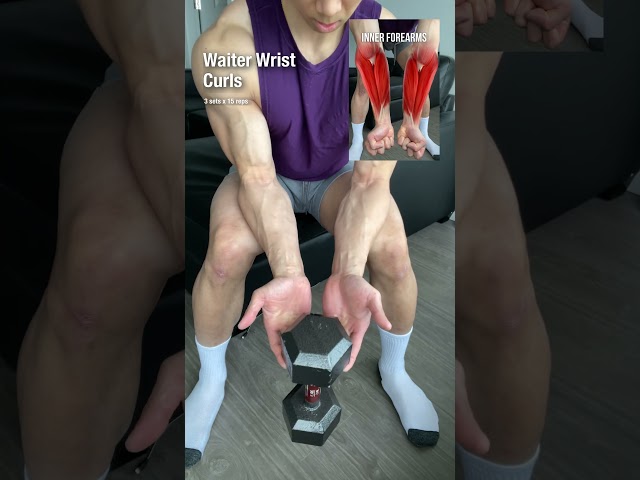
Wrist Curls
Wrist curls are a classic exercise for targeting the forearm flexors. These muscles are responsible for flexing the wrist. This exercise is easily performed with a barbell or dumbbells and can be completed in approximately 10-15 minutes. Performing wrist curls regularly will contribute to increased forearm mass and grip strength.
- Sit on a bench with your forearms resting on your thighs, wrists extending beyond your knees.
- Hold a barbell or dumbbells with an underhand grip.
- Lower the weight as far as possible, allowing your wrists to extend.
- Curl the weight up by flexing your wrists, squeezing your forearms at the top.
- Slowly lower the weight back to the starting position.
Reverse Wrist Curls
Reverse wrist curls work the forearm extensors, which are located on the top of the forearm. Strengthening these muscles is important for balanced forearm development. This exercise, like wrist curls, can be done with a barbell or dumbbells and takes around 10-15 minutes. Focus on controlled movements to maximize muscle activation.
- Sit on a bench with your forearms resting on your thighs, wrists extending beyond your knees.
- Hold a barbell or dumbbells with an overhand grip.
- Lower the weight as far as possible, allowing your wrists to flex.
- Curl the weight up by extending your wrists, squeezing your forearms at the top.
- Slowly lower the weight back to the starting position.
Hammer Curls
Hammer curls are a great exercise for targeting the brachialis and brachioradialis muscles, which contribute to forearm thickness. While primarily a bicep exercise, hammer curls heavily engage the forearms. Set aside about 10-15 minutes for this effective forearm builder.
- Stand with your feet shoulder-width apart, holding dumbbells at your sides with a neutral grip.
- Keep your elbows close to your body and curl the dumbbells up, maintaining the neutral grip.
- Squeeze your biceps and forearms at the top of the movement.
- Slowly lower the dumbbells back to the starting position.
Farmer’s Walk
The farmer’s walk is an excellent grip and forearm strengthening exercise. It involves carrying heavy weights for a specified distance or time. This exercise not only builds forearm strength but also improves overall core stability. Allow 15-20 minutes to incorporate this into your routine.
- Stand between two heavy dumbbells or kettlebells.
- Bend down and grab the weights with a strong grip.
- Stand up straight, holding the weights at your sides.
- Walk forward for a specified distance or time, maintaining a good posture.
Plate Pinches
Plate pinches target grip strength, which is essential for forearm development. This exercise involves pinching weight plates together and holding them for as long as possible. This relatively quick exercise can be incorporated within 5-10 minutes.
- Grab two weight plates, smooth sides facing out.
- Pinch the plates together with your fingertips and thumb.
- Hold the plates for as long as possible, focusing on maintaining a strong grip.
- Rest and repeat for several sets.
Towel Pull-ups
Towel pull-ups significantly increase the grip demand compared to regular pull-ups. This exercise effectively targets the forearms while working the back and biceps. Allocate approximately 15-20 minutes to perform several sets of towel pull-ups.
- Hang a towel over a pull-up bar.
- Grip the towel with both hands, ensuring a secure hold.
- Perform pull-ups as usual, focusing on maintaining a strong grip throughout the movement.
Barbell Finger Rolls
Barbell finger rolls specifically isolate the forearm flexors. This exercise involves rolling a barbell up and down using only your fingers. Dedicate about 10-15 minutes to this forearm-focused movement.
- Sit on a bench with your forearms resting on your thighs, wrists extending beyond your knees.
- Hold a barbell with an underhand grip.
- Roll the barbell down to your fingertips.
- Roll the barbell back up to your fingers
- Slowly lower the weight back to the starting position.
Cable Wrist Curls
Cable wrist curls offer constant tension throughout the entire range of motion. This can lead to improved muscle activation and growth. Incorporate this exercise for 10-15 minutes within your forearm routine.
- Attach a straight bar to a low pulley cable machine.
- Sit on a bench facing the machine with your forearms resting on your thighs, wrists extending beyond your knees.
- Hold the bar with an underhand grip.
- Curl the weight up by flexing your wrists, squeezing your forearms at the top.
- Slowly lower the weight back to the starting position.
A consistent forearm workout gym regimen, incorporating these exercises with progressive overload, contributes to significant gains. Adequate rest and proper nutrition are equally essential. Remember that forearm development takes time and dedication. Prioritize proper form to avoid injuries, gradually increasing weight and intensity.
Frequently Asked Questions About Forearm Workout Gym
Many individuals have questions regarding forearm training and achieving optimal results in a gym setting. This section aims to address some of the most common inquiries related to forearm workouts and development. Understanding these key aspects can contribute to a more effective and efficient training program.
How often should I train my forearms in the gym?
Training forearms 2-3 times per week is generally sufficient for most individuals. It is important to allow adequate rest between sessions for muscle recovery. Overtraining forearms can lead to injuries and hinder progress.
What weight should I use for forearm exercises?
Start with a weight that allows you to perform 10-15 repetitions with proper form. Gradually increase the weight as you get stronger. Avoid using excessively heavy weights, as this can increase the risk of injury.
Are forearm exercises necessary for overall strength?
While not always prioritized, forearm exercises contribute significantly to overall strength. A stronger grip enhances performance in many compound exercises. Strong forearms also aid in performing daily activities.
Can I train my forearms every day?
Training forearms every day is not recommended. Forearm muscles, like other muscle groups, require time to recover and rebuild. Adequate rest is crucial for muscle growth and injury prevention.
What are some signs of overtraining my forearms?
Signs of overtraining include persistent muscle soreness, decreased grip strength, and increased fatigue. If you experience these symptoms, reduce your training frequency and intensity. Consider incorporating more rest days.
Forearm workout gym sessions can significantly enhance both grip strength and overall upper body performance. Addressing these frequently asked questions ensures individuals have a better understanding. Consistent training, proper form, and adequate rest are vital for optimal results.
Essential Tips for Effective Forearm Workout Gym Training
Optimizing a forearm training routine requires adherence to key principles. These tips can help maximize results while minimizing the risk of injury. Incorporating these strategies into a training program can lead to significant improvements in forearm strength and size.
Remember, consistency and patience are crucial factors in achieving your desired forearm development. Focus on progressive overload, proper form, and adequate rest to ensure sustainable progress.
Prioritize Proper Form
Using proper form is crucial to effectively target the forearm muscles and prevent injuries. Avoid using momentum to swing the weight, focusing on controlled movements. Maintain a stable wrist position throughout the exercise.
Use Progressive Overload
Gradually increase the weight, resistance, or repetitions as you get stronger. Progressive overload is essential for continuous muscle growth. Track your progress and adjust your training accordingly.
Incorporate Variety
Include a variety of exercises to target different forearm muscles. Varying your routine prevents plateaus and promotes balanced development. Experiment with different grips and angles.
Listen to Your Body
Pay attention to your body’s signals and adjust your training as needed. Avoid pushing through pain, as this can lead to injuries. Incorporate rest days when needed to allow for muscle recovery.
Focus on Grip Strength
Grip strength is directly correlated to forearm development. Incorporate grip-specific exercises such as farmer’s walks and plate pinches. Strengthening your grip will improve performance in other exercises.
Ensure Adequate Rest and Nutrition
Rest and nutrition are vital for muscle recovery and growth. Aim for 7-9 hours of sleep per night and consume a balanced diet. Adequate protein intake is particularly important for muscle repair and growth.
Applying these tips during forearm workout gym sessions will enhance muscle growth. Adhering to these tips will also minimize the risk of injury. A comprehensive approach will lead to significant and sustainable gains.
Key Aspects of Forearm Workout Gym
Understanding the essential aspects is important when building a comprehensive forearm workout. Recognizing these facets enhances the effectiveness and promotes overall fitness development. Considering the keyword as a noun, these elements define what a session at the gym entails for building these arm muscles.
Grip Strength
Grip strength is a crucial component, affecting one’s ability to handle weights and perform daily tasks. In the context of “forearm workout gym,” developing this aspect enhances overall workout potential and effectiveness. This translates directly to better performance and reduced risk of injury.
Muscle Activation
Muscle activation refers to engaging the right muscles effectively during exercise. In the “forearm workout gym,” targeted activation ensures focused muscle development and strength gain. This also provides focused development and strength gain.
Balanced Development
Balanced development encompasses training both flexor and extensor muscles in the forearm. As part of “forearm workout gym,” this approach prevents imbalances and reduces injury potential. Balance also ensures optimal functionality.
Progressive Overload
Progressive overload is about gradually increasing the stress on forearm muscles over time. When done correctly within a “forearm workout gym” setting, it forces muscle adaptation and growth. This systematic approach yields sustainable strength and size improvements.
These essential facets, when integrated, create a robust framework for training at a gym. Prioritizing each aspect contributes to a well-rounded and effective regimen. This thorough approach maximizes the potential for building robust forearm strength and size.
The forearm workout gym environment offers various benefits. The availability of different equipment makes it an ideal location. The ability to progressively overload the muscles contributes to consistent gains.
Incorporating a forearm workout gym regimen yields improved grip strength and enhanced performance in other exercises. A dedicated training approach can result in significant growth. Consistency, proper form, and progressive overload are key components of successful routine.
Ultimately, developing a successful forearm workout gym routine requires dedication and patience, but the rewards of increased grip strength and enhanced performance are well worth the effort.
Youtube Video: